Can You Use a Lemon Vibrator During Pregnancy? What Experts Say
Here's the thing nobody talks about at prenatal appointments: pregnancy doesn't switch off your body's need for pleasure. But it does raise a lot of questions about what's safe, what feels different, and whether tools like a lemon vibrator are actually okay to use when you're carrying another person.
The short answer is yes, in most pregnancies, lemon vibrators and other clitoral vibrators are safe to use. But there's a lot of nuance in that "most," and some real physical changes that make the experience different. Let me walk you through what the research actually says, what you need to know about your specific situation, and how to keep intimacy alive when your body feels like it belongs to someone else.
What happens to your body during pregnancy
Your vulva gets more blood flow. Seriously. By the second trimester, the entire pelvic region is engorged and hypersensitive in ways that can actually make touch feel more intense. Some people report that orgasms feel stronger during pregnancy. Others find that the same stimulation that worked before now feels overwhelming.
Your cervix is also higher and more protected behind the baby. Your uterus is expanding. The hormonal environment is completely different. And your pelvic floor muscles are getting continuously stretched as the pregnancy progresses.
All of this matters when you're thinking about using any vibrator, including lemon clitoral vibrators, because it changes how your body responds to external stimulation.
The safety question: vibrators and pregnancy
The medical consensus is clear. Using a vibrator during pregnancy does not:
- Cause miscarriage
- Induce premature labor (unless you already have risk factors)
- Harm the baby
- Increase infection risk
Vibrations don't travel through your abdominal wall in any meaningful way. The baby is cushioned by amniotic fluid and uterine muscle. A lemon vibrator operating at standard frequency is not going to disturb that environment.
That said, some pregnancies do carry higher risk. If you've been told you have a threatened miscarriage, placental issues, preterm labor risk, or any reason to avoid orgasm, then vibrators are off the table. Talk to your midwife or OB before using any lemon vibrator or other intimate device.
For low-risk pregnancies, though, using a lemon sexual toy or other clitoral vibrator is medically fine.
What actually changes when you're pregnant
The physical safety isn't usually the real question. The experience itself changes in ways that matter more.
Sensitivity shifts. Your vulva may feel almost unbearably sensitive, especially in the third trimester. A lemon vibrator's gentle suction might feel perfect, or it might feel like too much. Many pregnant people find they need less intense stimulation than before, or they need longer warm-up time. The good news is that lemon clitoral vibrators are already designed for gentler, more intuitive stimulation than traditional vibrators.
Positioning gets awkward. Your belly is in the way. Your center of gravity changes. You might need more pillows, different positions, or a partner's help. This isn't a reason to avoid a lemon vibrator, but it is something to plan for.
Desire fluctuates. Pregnancy hormones affect libido in unpredictable ways. Some people have increased desire. Others lose it entirely. This is normal and temporary, and it's not something a vibrator can fix. If your desire has tanked, that's worth discussing with your partner separately from the question of whether you use a tool.
Cervical sensitivity increases. By the third trimester especially, the cervix can feel tender or reactive. Deep penetration or any contact with the cervix might cause cramping. A lemon vibrator focuses on clitoral stimulation rather than internal pressure, which can actually make it easier to use safely during pregnancy compared to other toys.

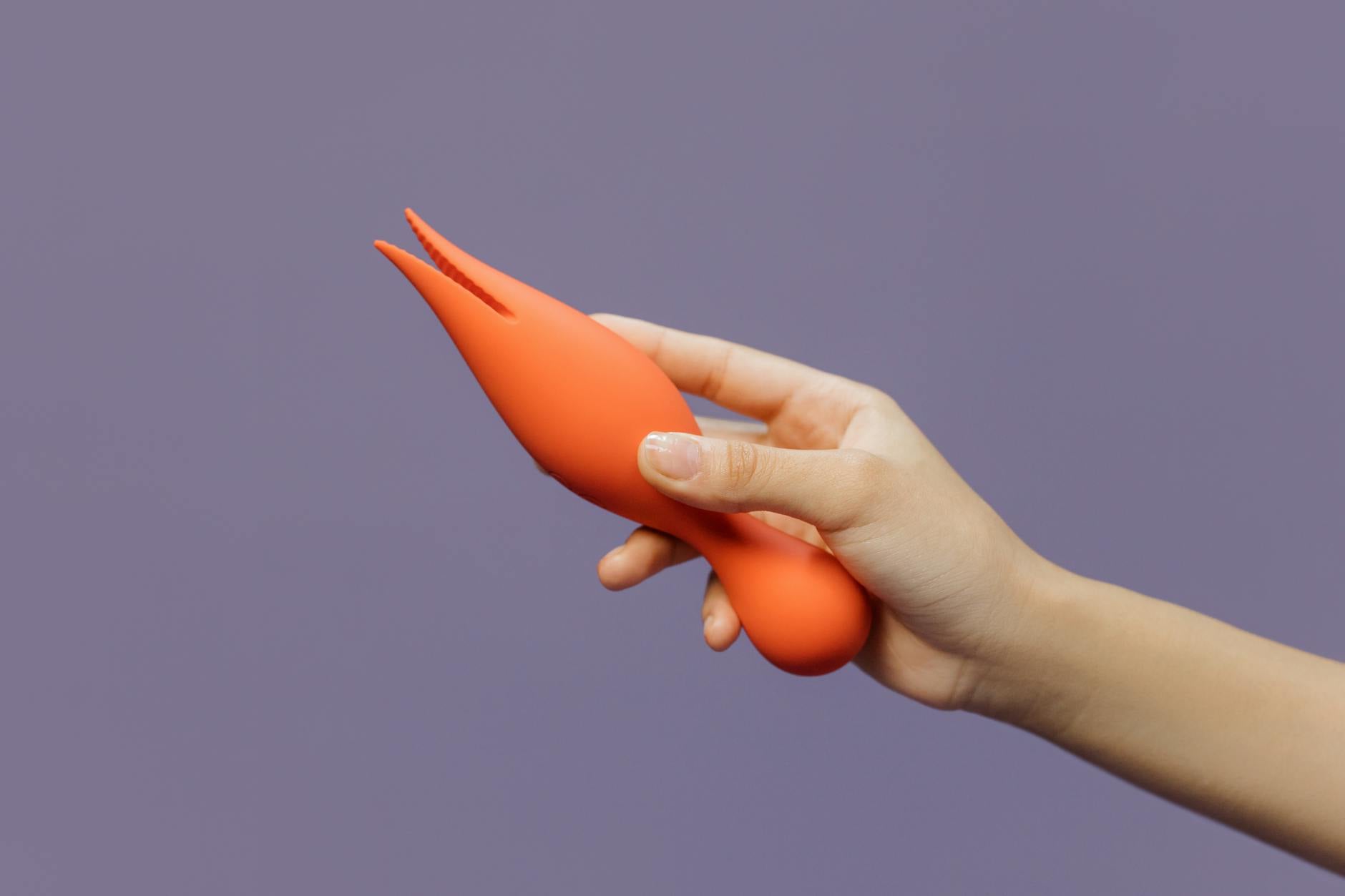
Photo by Madison Inouye on Pexels
How to use a lemon vibrator safely during pregnancy
If you and your partner have the green light from your care provider, here's what actually works:
Start low and go slow. Your sensitivity is higher. Begin at the lowest intensity setting on your lemon vibrator and adjust from there. You might be surprised at how much sensation you feel at settings that used to feel mild.
Lubrication matters more. Pregnancy creates more natural lubrication in many cases, but the tissue is also more delicate. Using a water-based lubricant with your lemon clitoral vibrator is a good idea. It reduces friction and makes the experience more comfortable.
Take rest breaks. If you feel cramping, heaviness, or anything that doesn't feel right, stop. Your body is working hard. Listen to it.
Avoid anything that triggers cramping. Some people find that orgasm causes harmless Braxton-Hicks contractions. Others find it causes concerning cramping. Know the difference. Braxton-Hicks feel like tightening and then release. Cramping that doesn't release is worth mentioning to your provider.
Communicate with your partner. If you're using a lemon vibrator with a partner present, be clear about what feels good, what doesn't, and when you want to stop. Pregnancy is a time when many couples feel disconnected. Maintaining intimacy is important, but pressure to perform is not. As you explore using tools like lemon sexual toys during pregnancy, keep the focus on connection, not on reaching a specific outcome.
The real conversation: intimacy through pregnancy
Using a lemon vibrator during pregnancy isn't really about the vibrator. It's about maintaining a sense of your body as yours, and your sexuality as something that exists separate from your role as a soon-to-be parent.
Many pregnant people report feeling disconnected from their bodies. The physical changes are enormous. Your body is being colonized by another person. Your physical autonomy feels compromised. In that context, having a lemon vibrator or other tool that creates pleasure on your terms, in your body, can feel genuinely grounding.
It's also a way to stay connected to your partner. Pregnancy can create emotional distance. Foreplay, touch, and yes, orgasm, are ways to rebuild that connection. Using a clitoral vibrator together can feel less penetrative and more intimate than other options, which many couples find helpful during pregnancy.
But here's what I tell couples in my practice: use the vibrator because it feels good, not because you think you're supposed to. If your desire is gone, that's real and valid. If you want to focus on cuddling and talking instead, that's also intimacy. Don't let the vibrator become another performance metric.
When to skip the vibrator
There are situations where using any vibrator, including lemon vibrators, during pregnancy is genuinely not recommended:
- You've been told to avoid sexual activity due to bleeding or placental complications
- You have a history of preterm labor
- You have an incompetent cervix
- Your provider has given you specific instructions to avoid orgasm
- You experience pain, bleeding, or unusual cramping when using a vibrator
In any of these cases, talk to your provider. There are other ways to maintain intimacy that don't involve vibration or orgasm.
Reclaiming pleasure as pregnancy changes you
One last thing I want to say: using a lemon vibrator during pregnancy is not frivolous. Your pleasure matters. Your body matters. The connection you maintain with yourself and your partner during pregnancy affects how you move into parenthood.
If you're thinking about whether a lemon clitoral vibrator is right for you during pregnancy, start by checking in with your care provider. Then listen to your body. A lemon vibrator is designed to be intuitive and responsive to your feedback. It's a tool that adapts to you, not the other way around.
Pregnancy is temporary. Your relationship to your body and your sexuality is not. Using a lemon vibrator or another tool that helps you feel pleasure and connection during this transition is self-care. It's not selfish. It's not irresponsible. It's taking care of yourself during one of the biggest transitions of your life.
People also ask
Can vibrations harm the baby during pregnancy?
No. Vibrations from a lemon vibrator or other external device do not penetrate deeply enough to affect the baby. The amniotic fluid and uterine muscle provide complete cushioning. The baby cannot feel the vibration. This is one of the most common worries, and it's based on a misunderstanding of how sound and vibration travel through tissue. Medical research on vibrator use in pregnancy confirms there is no risk to fetal development or pregnancy outcomes.
Will using a vibrator trigger labor?
Not in a low-risk pregnancy. Labor is triggered by hormonal shifts and physical readiness, not by orgasm or vibration. In fact, some research suggests that sexual activity throughout pregnancy may be associated with slightly lower preterm birth rates. That said, if your provider has told you to avoid sexual activity, follow that advice. But for most pregnancies, a lemon vibrator will not induce labor.
Does pregnancy make vibrators feel different?
Yes, absolutely. Increased blood flow to the vulva makes the area more sensitive. Tissue is more delicate. Many pregnant people find they need lower intensity settings on their lemon clitoral vibrator, or they need to use it in shorter sessions. The sensation can actually feel more intense and more satisfying, or it can feel overwhelming. Both experiences are normal. Pay attention to what your body is telling you and adjust accordingly.
Is it safe to use a vibrator in the third trimester?
Generally yes, but with more caution. In the third trimester, your body is preparing for labor. Some people experience increased Braxton-Hicks contractions with stimulation. This is not dangerous, but it can be uncomfortable. If you notice cramping that doesn't ease, or if using your lemon vibrator triggers concerning symptoms, stop and mention it to your provider. Some people find that avoiding vibration in the final weeks feels better. Listen to your body.
Can my partner use a vibrator on me during pregnancy?
Yes, if you want them to. Some pregnant people prefer partner involvement because it creates closeness. Others prefer solo use because it's less pressure and more about their own pleasure. There's no right answer. Communicate about what feels good, what doesn't, and what you both need during this transition. A lemon vibrator is a tool that works well for either scenario.
Should I talk to my doctor about using a vibrator during pregnancy?
It's not necessary if you're in a low-risk pregnancy, but it doesn't hurt. Some providers are more open to this conversation than others. The key question to ask is whether there are any medical reasons you should avoid sexual activity or orgasm. If the answer is no, then vibrator use is medically fine. You don't need permission, but you do need to know if there are specific restrictions in your case.
Moving forward with confidence
Pregnancy changes your body. It changes what feels good. It changes what you want. It changes the texture of your relationship. A lemon vibrator can be part of maintaining pleasure and connection through all of that, but it's not a solution to any deeper disconnection. That conversation with your partner, with yourself, and with your provider is the real work.
If you want to explore using a lemon clitoral vibrator during pregnancy, get the medical clearance and then trust your body. If you find that your pleasure matters less right now than rest and safety, that's also exactly right. Both choices are legitimate. Both are yours to make.
Want to explore how to maintain intimacy in your relationship through major life transitions? Reach out to Hello Nancy's team at /contact, or check out our guide on how lemon vibrators work better for sensitive skin, which often applies during pregnancy as well.