Let's start with what everyone feels but nobody says
Your arousal used to show up fast. You'd think about your partner, or they'd touch you, and there it was. Then something shifted. Now it takes fifteen minutes to feel anything. Twenty. Sometimes longer. And the panic that comes with that slowness? That's the part that actually kills the mood, not the slowness itself.
Here's what I've learned working with thousands of couples: slower arousal is not a problem to fix. It's information to use.
Why arousal timing changes (and it's rarely what you think)
The obvious culprits are hormones, stress, and relationship drift. All real. But the most common reason arousal takes longer to build is simpler than that: you've stopped creating the conditions for it to happen.
When desire comes quickly and easily, we barely notice the setup. A touch, a glance, five minutes and you're there. But as you move through your thirties, forties, and beyond, or as a long-term relationship settles into comfort, arousal requires what I call "active scaffolding." You have to build it intentionally.
This isn't damage. It's a feature, not a bug. Slower arousal means your nervous system has shifted from reactive to responsive. Your body wants permission, presence, and usually a bit of novelty before it turns on. That's not broken. That's actually more sophisticated.
The role of mental foreplay
The first fifteen minutes of arousal happen entirely in your brain. Your thoughts, your stress level, whether you feel safe and wanted, whether there's anything pulling your attention away. This is where most people lose the plot.
I ask couples: "What are you thinking about during foreplay?" The honest answers are things like "Is the laundry done?" "Do I look okay right now?" "Will this take too long?" "Am I supposed to be enjoying this more?"
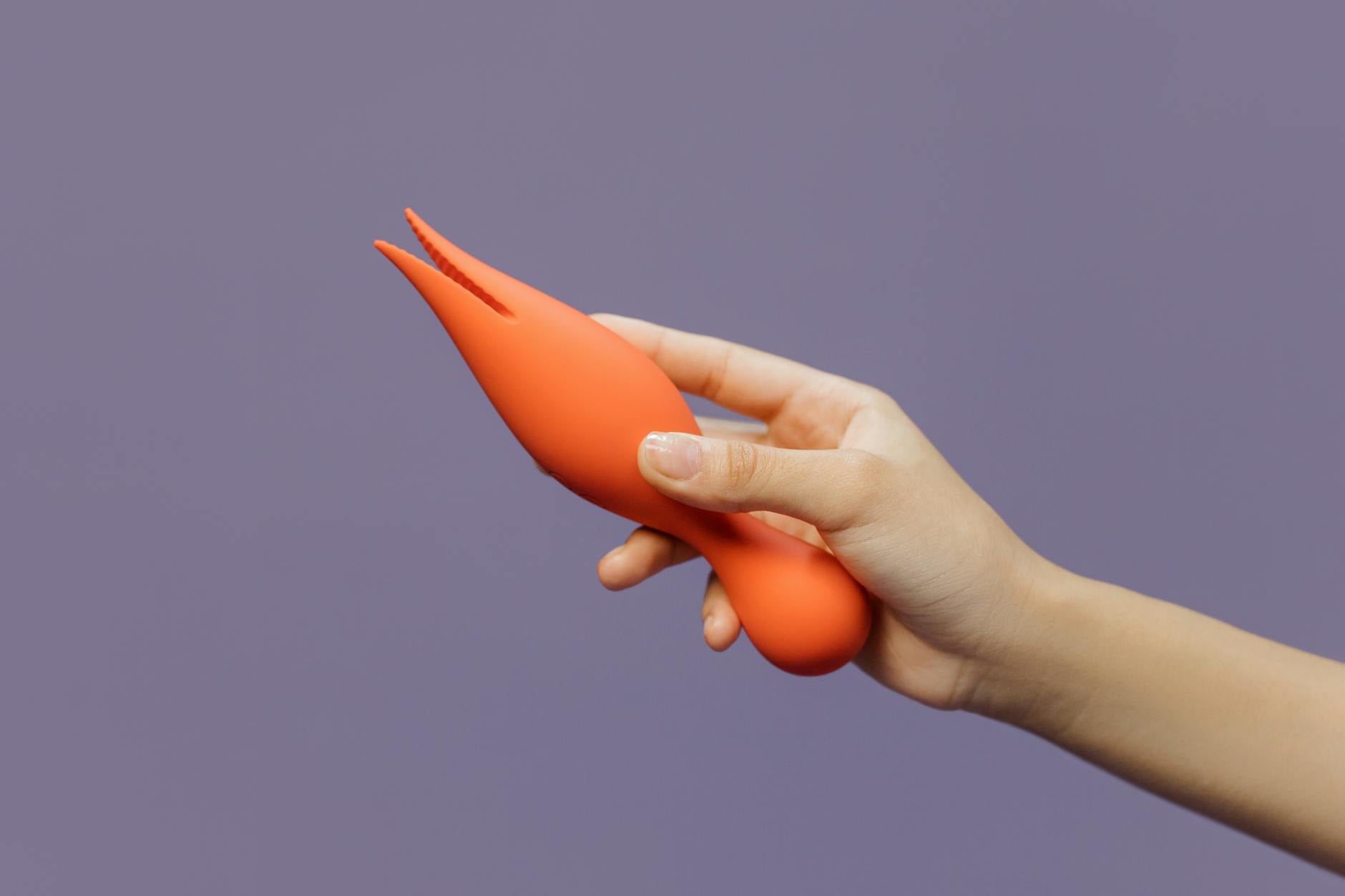
Your lemon clitoral vibrator can't compete with a running grocery list. But it can anchor your attention. The sensation, the ritual of reaching for it, the novelty of it even if you've used one before, creates a moment where your brain goes quiet.
Start with that. Start five to ten minutes before you think you want to use any toy. Sit together, touch each other, talk, even just lie close. Let your nervous system settle into the idea that pleasure is the plan.
How a lemon vibrator fits into slower arousal
Lemon vibrators work differently than other clitoral toys. The suction stimulation is gentler and broader than direct vibration, which means your nervous system doesn't have to work as hard to process the sensation. It's easier to stay present with it.
When arousal is slow, your goal isn't to jump straight to high intensity. Your goal is to stay engaged long enough for arousal to actually arrive. This is where a tool like the Lem matters. You're not forcing anything. You're extending the scaffolding.
Start on the lowest setting. Seriously. Pattern one, minimum intensity. You're not looking for a quick response. You're looking for sustained sensation that keeps your mind tethered to pleasure instead of your to-do list.
Many people with slower arousal patterns find that once arousal actually starts building, it builds faster than it used to. The slowness is the entry point, not the entire story.
The timing adjustment that actually works
If you're used to sex happening spontaneously, slower arousal requires a shift in approach. Not a depressing shift. A practical one.
Instead of waiting for desire to happen and then acting on it, you create the conditions for desire to appear. This might sound like planning, and it is. But planning sex is not the death of desire. It's usually the opposite.
When you know you have time set aside, your nervous system relaxes. You're not rushing. You're not checking the clock. You're not half-listening for the kids or the doorbell. That permission changes everything.
Budget thirty to forty-five minutes total. Use the first fifteen for presence building. The next twenty to thirty for actual touch and exploration. If you're using a lemon vibrator, bring it in around the twenty-minute mark, not the five-minute mark. You're not trying to speed up arousal. You're trying to deepen it once it's already moving.
When you're using a lemon vibrator with a partner
If you have a partner, the conversation matters more than the toy. A lot of people bring a vibrator into the mix because they're frustrated with slowness, and they don't explain that. Their partner thinks "Oh, I'm not enough anymore." That's a conversation killer.
Be direct: "My arousal is taking longer lately. It's not about you, and it's not about what's wrong with me. It's just how my body is working right now. I want to try something that helps me stay present so we can actually connect." That honesty actually builds intimacy.
Once you've had that conversation, let your partner watch you use the toy. Let them see where it feels good. Let them understand the timing. Some partners will want to hold it. Some will want to create a rhythm together. The tool becomes collaborative, not a workaround.
Solo arousal and why it's relevant
If you're exploring on your own, slower arousal is actually an invitation to slow down the whole experience. Most people rush through solo pleasure like they're checking a box. When arousal is slower anyway, you might as well lean into it.
Use a lemon clitoral vibrator during a longer session where you're not trying to get anywhere specific. Explore different patterns on different parts of your vulva. Notice where the sensation lands differently. Pay attention to the buildup instead of fixating on the endpoint. This is how you learn your own arousal architecture.
The byproduct is often that you can bring this knowledge into partnered sex. You know what actually works for your body. You can guide your partner. You can use the toy more intentionally.
What changes as you dial in slower arousal
Once you stop fighting slowness and start working with it, a few things shift.
First, anxiety drops. You're not panicking about "why isn't this working." You have a plan.
Second, pleasure often deepens. When you're not rushing, you notice more. Sensation becomes richer. Orgasms, when they arrive, tend to feel more integrated.
Third, your relationship with your body improves. You're no longer seeing slower arousal as a deficiency. You're seeing it as useful information that changes how you approach pleasure.
The lemon vibrator is a tool that helps anchor you during that transition. It's not a magic fix. It's evidence of permission: you're worth this time, this attention, this intention.
FAQ: Slower arousal and lemon vibrators
Is slower arousal normal as you get older?
Completely. Arousal changes across the lifespan for hormonal, neurological, and relationship reasons. Slower arousal in your thirties, forties, or beyond is one of the most common patterns I see clinically. It doesn't mean your capacity for pleasure has decreased. It means your pathway to pleasure has shifted.
Can a lemon vibrator actually help if arousal is slow?
Yes, but not the way you might think. The lemon clitoral vibrator isn't a shortcut to faster arousal. It's an anchor to presence. When your mind is jumping around, the sensation gives your brain something to focus on. That focus is what creates conditions for arousal to build.
How long should I wait before bringing a vibrator into the mix?
Wait until you've already spent ten to fifteen minutes on other forms of foreplay or self-exploration. A vibrator works best when your body is already somewhat present and engaged. Jumping straight to a toy when you're mentally checked out rarely helps.
Does using a lemon vibrator make it harder to orgasm without one?
No. Pleasure is cumulative, not competitive. Using a lemon clitoral vibrator doesn't rewire your body to need it. It simply adds another option to your toolkit. Many people use vibrators sometimes and not other times, without any issue.
What if slower arousal is about relationship stuff, not my body?
Then the vibrator alone won't fix it, and that's important to know. If you're feeling disconnected from your partner, resentful, or emotionally unsafe, slower arousal is your nervous system telling you something real. A tool can help with the mechanics, but the relationship piece needs attention too. Consider working with a couples therapist if this resonates.
Is there a difference between slow arousal and low desire?
Yes, and it's crucial. Slow arousal means it takes time, but it shows up. Low desire means you're not interested at all. Slow arousal is about pacing. Low desire is about interest. A lemon vibrator can help with slow arousal. Low desire usually points to something that needs a deeper conversation: stress, hormones, relationship satisfaction, depression, or medication effects.
The real work
Slower arousal isn't a bug in your system. It's an invitation to stop treating sex like something that happens to you and start treating it like something you create together, or with yourself.
When you shift that mindset, a lemon clitoral vibrator becomes part of a larger story about intentionality, presence, and the decision to prioritize your own pleasure. That decision is what actually matters.
Ready to explore differently? Reach out to talk about what might work for your specific situation.