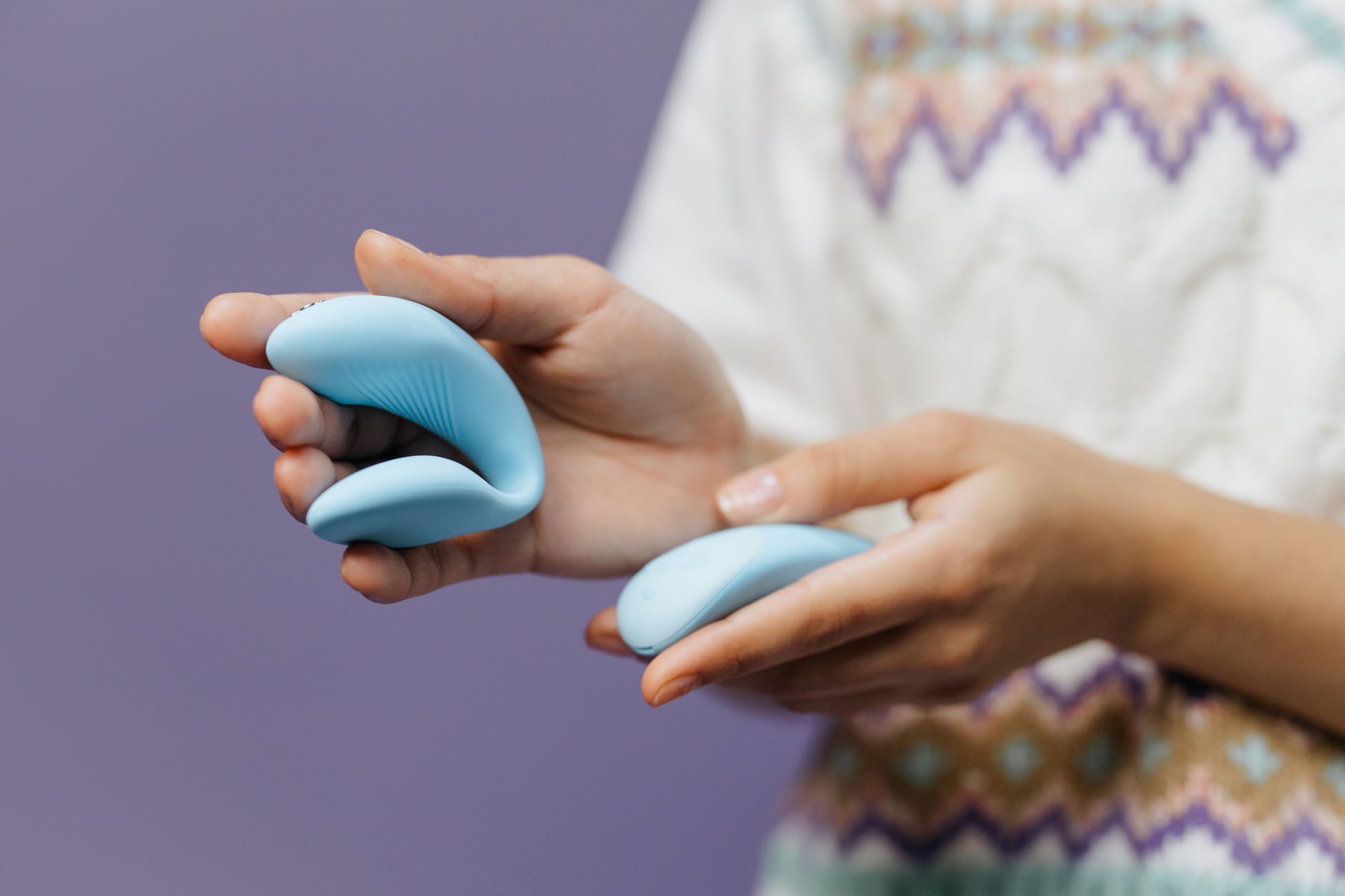
Here's what nobody tells you about your cervix
Your cervix is not a static target. It moves. It changes texture. It shifts in position depending on where you are in your cycle, how aroused you are, and honestly, what year it is. Over decades, cervical sensitivity transforms in ways that directly affect what kind of stimulation feels incredible versus uncomfortable.
Most people don't talk about this because cervical sensation lives in this weird gray zone between pleasure and pain. It's not as straightforward as clitoral sensitivity, which is why conventional advice ("just use more lube") often misses the point entirely. A lemon clitoral vibrator works differently at 25 than it does at 45 or 55. Understanding why matters.
The science of cervical sensitivity across decades
Your cervix has two main nerve pathways. One carries sensation of pressure and deep touch; the other carries sensations of intense stimulation. In your 20s and 30s, those pathways fire in a pretty balanced way. But collagen production shifts as estrogen fluctuates, which changes the cervix's texture and how those nerves respond.
Here's what research shows happens over time:
- Tissue thinning. The cervical epithelium (outer layer) becomes thinner, which makes deep pressure feel more intense. This isn't bad. It actually means you need less force to feel something.
- Increased vascularity. Blood flow patterns change, which alters how quickly the cervix engorges during arousal. This changes the sweet spot for depth.
- Nerve density shifts. The distribution of nerve endings stays roughly the same, but their responsiveness changes. Some people report their most intense cervical pleasure comes after 50.
- Positional changes. As ligaments relax over time, the cervix sits slightly differently in the vaginal canal. This means what used to be the "right spot" might require a slightly different angle.
None of this makes pleasure less possible. It makes it different, and often better, because you finally know what you actually want.
Why a lemon vibrator handles cervical sensitivity better than you'd expect
A lemon sucker like the Lem works through gentle suction, not aggressive vibration. This matters enormously for cervical comfort as you age. Here's why.
Traditional vibrators transmit vibration in a linear way. If you're directing that vibration toward your cervix, you're essentially sending a jackhammer toward a structure that, post-40, prefers a gentler conversation. The Lem's suction pattern creates what I think of as "responsive pressure." You control the intensity. You can start at pattern 1 or 2. You can build slowly. You're not locked into a frequency that's designed for someone else's anatomy.
The suction also creates something that direct vibration doesn't: a sense of traction. That traction can be deeply pleasurable for cervical sensation, especially if your cervix has become more sensitive to pressure over time. It's the difference between a jackhammer and a massage that knows when to ease up.
What changes at different life stages
Ages 25-35: Your cervix is fairly mobile and resilient. Direct stimulation often feels good. If you use a lemon clitoral vibrator during this phase, you might find that patterns 4-6 feel satisfying. Your cervix recovers quickly from anything that feels intense.
Ages 35-45: This is the sweet spot where many people report their most pleasurable cervical sensation. Estrogen is still solid. Sensation is heightened. Nerve pathways are responsive. But you might start noticing that certain angles feel better than others. This is your cervix telling you it's developing preferences.
Ages 45-55 (perimenopause and beyond): Cervical tissue becomes more delicate. What used to feel good at full intensity now might feel better at medium intensity. The Lem's pattern options become crucial here. You're not locked into one vibration speed. You can dial it down and still get intense sensation because suction works on a different principle than vibration.
Ages 55+: Many people report that cervical pleasure actually intensifies, but it requires more intentional foreplay and positioning. Thinner tissue means sensation travels faster and deeper. Some people find patterns 2-4 on a lemon vibrator more satisfying than the highest settings.
Positioning and angle matter more now
When cervical sensitivity changes with age, the angle of approach becomes critical. Your cervix has probably moved slightly. The ligaments supporting it have relaxed. The result is that what used to work at a 45-degree angle might now work better at 60 degrees, or head-on, or slightly off-center.
Here's what I recommend: use a lemon clitoral vibrator to map your current cervical landscape. Start with low pressure, high position. Slowly angle downward and inward. Notice where you feel sensation change. That's your new sweet spot. It might be different from where it was five years ago. That's not a problem. That's information.
If you're using a lemon vibrator with a partner, communication becomes even more essential. Your partner probably doesn't know your cervix has shifted. Tell them. Show them. Let them feel the difference as you guide the vibrator to the angle that works now.
Pain versus pleasure: drawing the line
Cervical sensitivity changes can sometimes drift into pain territory, especially if you ignore what your body is telling you. Here's how to tell the difference.
Pleasure that borders on intensity should feel:
- Localized but radiating
- Building toward something (arousal climbing)
- Sustainable (you could continue for 5-10 minutes comfortably)
- Pleasurable in retrospect (you want to do it again)
Pain that's masquerading as pleasure feels:
- Sharp or pinching
- Static (it doesn't build, it just hurts)
- Immediately exhausting
- Something you want to escape from
If you're using a lemon vibrator and cervical sensation feels like the second category, stop. Lower the pattern. Try a different angle. Move the stimulation higher, toward your clitoris instead of deeper. Your cervix is telling you something useful: this isn't working right now.
How hormonal status changes the equation
If you're in perimenopause or menopause, cervical sensitivity shifts alongside estrogen. Lower estrogen means thinner, more delicate tissue. That doesn't mean your cervix is broken. It means you're working with different material.
For people using hormone replacement therapy (HRT), cervical sensitivity often improves within weeks because tissue thickness returns. If you're not using HRT and you're navigating post-menopausal changes, a lemon clitoral vibrator becomes even more valuable because you can adjust intensity in real time. You're not stuck with whatever vibration pattern a traditional toy offers.
Some people find that using a water-based lubricant specifically designed for sensitive or thinner tissue helps cervical pleasure feel more accessible. That's not because you're broken. It's because your cervix is doing what it's supposed to do: changing with your body's seasons.
Building arousal in ways that honor what's changed
Cervical sensitivity doesn't exist in isolation. It lives in your whole arousal system. As that system changes, so does how to access cervical pleasure effectively.
Instead of jumping straight to deep stimulation, most people find that a longer warm-up makes cervical sensation both more accessible and more pleasurable. This means:
- 10-15 minutes of external stimulation with your lemon sucker before moving inward
- Attention to full-body arousal, not just local sensation
- Allowing your cervix to engorge and rise into position naturally (it does this on its own during arousal)
- Building intensity gradually instead of starting at pattern 5
You might also find that combining clitoral stimulation with gentler cervical attention feels better than either sensation alone. A lemon vibrator is small enough to allow you to move it around and blend sensations in ways that larger toys don't. That flexibility is a genuine advantage as your preferences evolve.
When to seek support
If cervical sensation has disappeared entirely, if touching your cervix causes pain that doesn't resolve with positioning changes or lubricant, or if you're noticing new sensation changes alongside other symptoms (bleeding, discharge, pain), talk to a healthcare provider. Cervical health can be affected by things unrelated to aging: infections, fibroids, polyps, scar tissue. A lemon clitoral vibrator can help you explore pleasure, but it can't diagnose or treat underlying conditions.
A good gynecologist or pelvic health specialist can help you understand whether what you're experiencing is normal aging, an opportunity to adjust your approach, or something that needs treatment. There's no shame in that conversation. Your pleasure matters.
The bigger picture
Cervical sensitivity changes over time, but it doesn't end. It evolves. You're not losing capacity. You're gaining specificity about what actually works for your body right now. A lemon vibrator, with its range of patterns and gentle approach, adapts to those changes more easily than many toys because you're in control. Start low. Pay attention. Let your body tell you what's changed. Then adjust accordingly.
People Also Ask
Can cervical sensitivity become painfully heightened with age?
Yes, but it's usually manageable. As tissue thins, sensation can feel more intense, sometimes uncomfortably so. This is why pattern control matters on a lemon vibrator. Starting at patterns 1-3 instead of maxing out immediately helps you gauge what your cervix can tolerate now. If heightened sensitivity persists and makes pleasure impossible, a pelvic health physical therapist can help you rebuild tolerance through gradual desensitization work.
Does using a lemon clitoral vibrator frequently change cervical sensitivity over time?
Regular use doesn't permanently change sensitivity, but it does improve your ability to feel pleasure consistently. Your nervous system gets better at recognizing and responding to stimulation. Think of it like training your pleasure pathways. The more you explore with intention, the more nuanced your sensation becomes. This is actually beneficial, not harmful.
Is cervical sensation supposed to feel uncomfortable during arousal?
Some discomfort is normal, especially if your cervix is being approached for the first time or in a new way. Mild pressure-based discomfort that resolves when you adjust position or reduce intensity is fine. Sharp pain, cramping that doesn't ease, or sensation that makes you want to stop is not. Honor that feedback. Your cervix knows what it needs.
Should I tell my partner about changes in cervical sensitivity?
Absolutely. If cervical sensation has shifted, your partner might accidentally hit an angle that used to work but now doesn't. A simple conversation saves both of you frustration. You might say something like: "My cervix seems to be more sensitive to depth lately. Let's explore gentler pressure instead." That's useful information, not a complaint.
Can you rebuild cervical sensitivity if it's become numb?
Yes, often. Numbness sometimes responds well to a combination of attention (using a lemon vibrator intentionally), improved circulation (better overall sexual health), and sometimes addressing underlying causes like medication side effects or hormonal changes. A pelvic health specialist can help identify whether numbness is reversible or if adjustment of expectations is the right move.
Does estrogen therapy restore cervical sensation the way it does vaginal lubrication?
Often, but not always completely. HRT improves tissue thickness and blood flow, which usually improves sensation. Some people find cervical pleasure becomes accessible again on HRT. Others find it shifts rather than restores. Either way, the change usually happens within 4-8 weeks of starting treatment. Your body will show you what's possible.