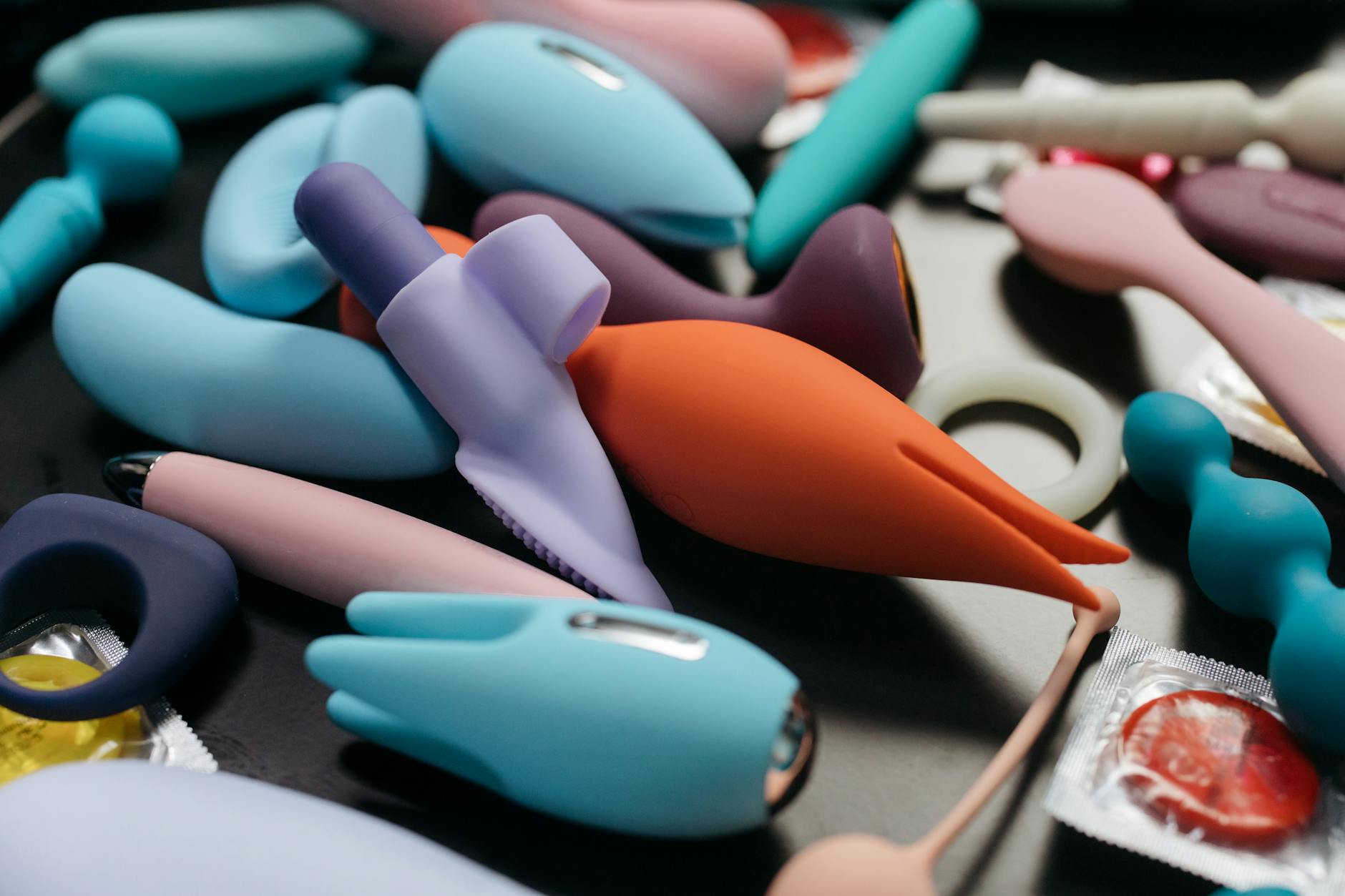
The weird gap nobody talks about
You want to want your partner. You intellectually know you love them. And yet. When they touch you, something between your brain and your body goes quiet. It's not that you're numb exactly. It's that the signal isn't getting through. The desire is there somewhere, but it feels like it's happening to someone else.
This is desire disconnection. It's wildly common, it's rarely discussed openly, and it doesn't mean anything is broken about you.
What actually happens when desire gets disconnected
Desire and sensation are not the same thing, and they can absolutely operate on different tracks. Here's the mechanism. Your brain can absolutely be interested in sex. But if your nervous system is dysregulated, stressed, or carrying emotional weight, the signal from brain to body gets fuzzy. The wiring is intact. The current just isn't flowing where it needs to go.
This happens for so many reasons. Unresolved conflict with your partner. The mental load of managing a household or caring for aging parents. Grief, even quiet grief you've gotten used to carrying. Burnout from work. Scrolling for three hours before bed when you promised yourself you'd sleep.
All of these are different problems with the same physical outcome. Your body goes into a kind of protective dissociation. Arousal doesn't arrive on schedule. Touch doesn't register the way it used to. And the harder you try to force it, the more your nervous system digs in.
Why sensation itself can help rewire the connection
Here's what I tell people in my practice: you can't think your way out of a nervous system problem. You have to feel your way out.
When you use a lemon clitoral vibrator, you're not forcing arousal. You're creating a specific, targeted stimulus that's strong enough to cut through that protective numbness. A lemon vibrator's suction pattern is different from fingertips or a partner's touch. It's predictable, consistent, and it activates nerve pathways that generic touch sometimes can't reach.
The lem vibrator, for instance, creates a rhythmic pressure wave rather than friction. That pattern can actually bypass some of the brain's resistance because it's novel enough to snap your nervous system into attention. You're not trying to want it anymore. You're just receiving a very clear signal to your body, and your body is designed to respond.
That responsiveness is the bridge back to desire.
The mental setup that actually works
Tool alone isn't enough, though. The way you approach this matters as much as the device itself.
First, kill the performance pressure. You're not trying to come. You're not trying to be sexy. You're doing reconnaissance on your own body. That sounds weird, but it's liberating. Tell your partner this if you have one. "I'm going to spend some time with myself to reconnect. This isn't about you, it isn't about failing to get turned on with you. It's maintenance." A good partner will get it.
Second, timing is everything. Don't do this when you're running on fumes. Pick a morning when you've had coffee and your to-do list feels manageable. Or an evening where the kids are down and you're not refreshing your email. Your nervous system needs permission to settle before it can feel anything.
Third, context changes everything. A dark room with your phone across the room. Not Instagram, not work email, nothing. Just you and the space. Some people want music. Some need absolute quiet. Experiment. Your nervous system will tell you what helps it relax into sensation.
How to actually use the lemon vibrator in this situation
Start externally. The lem vibrator works brilliantly on the clitoral glans and the external labia. You don't need to work toward anything. You're just letting sensation happen.
Begin with the lowest setting. Not because you need to work up, but because you want to hear what your body is actually saying. On a lower intensity, you can feel nuance. Higher settings can sometimes overwhelm a nervous system that's already suspicious of pleasure, which is counterintuitive but real.
Give yourself at least 15 minutes. Seriously. When your nervous system has been in protection mode, it takes time to downregulate. The first five minutes might feel like nothing. That's normal. You're not doing it wrong. You're just waiting for your body to believe that this is safe.
If nothing happens, that's information too. That tells you your nervous system needs something different. Maybe a longer warm-up. Maybe you need to address something with your partner first. Maybe you need to talk to a therapist. All of that is valid.
The reconnection phase
Once sensation starts to register, something shifts. You might notice that your breathing changes. Or your pelvis tilts slightly. Or a thought pops up about something totally unrelated, which is your brain's way of processing that your body is being felt again.
This is where the lemon vibrator becomes a bridge back to your partner, if you want that. As your nervous system learns that pleasure is safe again, you can bring them back into the picture. Some people do this by using the lemon vibrator together. Some start with touch again, now that their body believes it can feel. Some need to take it slowly, using the vibrator solo for a few weeks before they're ready to be vulnerable with someone else.
There's no timeline here. Your body will tell you when it's ready.
When to bring your partner into the picture
If you have a partner and you want to reconnect intimately, communication comes first. Not during sex. Before. You might say something like, "I've been feeling disconnected, and I want to rebuild this with you. I'm working on my own nervous system first because I can't show up for you when I'm dysregulated. I want to be present with you." Most partners who love you will respect this.
Once you've done some solo work with a lemon clitoral vibrator and your body is remembering how to feel, you can invite them to watch, or to be in the room while you use it. Some couples find that incredibly intimate. Your partner might use the lemon vibrator on you. The point is that you've already done the hardest part. Your body already knows pleasure is possible. Now it's about rebuilding trust between the two of you.
That part takes longer than the sensation part. That's okay.
The role of patience in actual desire return
Desire doesn't come roaring back. It creeps in. You'll notice that you think about your partner differently for a second. Or you want to sit closer to them. Or you think about kissing them when you're not trying to think about that. These are signals that your nervous system is healing.
Keep using the lemon vibrator during this time if it helps. There's no point where you graduate out of it. This isn't a ladder you climb. It's a tool that works as long as you need it to.
When this needs professional support
If desire disconnection has been ongoing for more than a few months, or if it's paired with depression, anxiety, or feeling generally checked out from your life, a therapist who specializes in somatic work (body-based therapy) can be genuinely life-changing. Some therapists practice within the Gottman Method, which addresses both the emotional and physical dimensions of intimacy.
Also, if your disconnection started after a specific event like a betrayal, an assault, or a major life loss, that's trauma work. A lemon vibrator can't fix that alone. A good therapist can. You deserve that support.
Disconnection is real. It's also reversible. The bridge back starts with letting your body feel something specific and safe, and a lemon vibrator is exactly the right tool for that.
People also ask
Is feeling disconnected during sex a sign that something is wrong with my relationship?
Not necessarily. Disconnection is a nervous system issue first and a relationship issue second. Yes, unresolved conflict or emotional distance can trigger it. But so can burnout, grief, medication side effects, or just the accumulated stress of existing. Before you assume it's your relationship, get honest with yourself about what's happening in the rest of your life. That said, if the disconnection started after a specific rupture with your partner, therapy together might be the right move.
How long does it take to reconnect to sensation with a lemon vibrator?
Every body is different, but most people notice a shift within 2-3 weeks of consistent practice. The key word is consistent. That might be 2-3 times a week, 15-20 minutes each time. You're not training yourself to orgasm. You're retraining your nervous system to believe that pleasure is safe and available. That takes time, but it usually works.
Can I use a lemon clitoral vibrator with my partner even if I'm disconnected?
Yes, but I'd suggest starting solo first. When you're already dysregulated, adding the pressure of a partner's presence or expectations can make it harder for your nervous system to settle. Once you've had some solo wins, bringing your partner in can deepen the reconnection. Some couples find it incredibly bonding to use a lemon vibrator together, once both partners are on the same page about it.
What if I use the lemon vibrator and nothing happens?
That's information. Your nervous system might need more time to settle. Try a different time of day, a different context, or a longer wind-down. If that doesn't work, it might mean your disconnection is rooted in something a vibrator can't address alone. That's when talking to a therapist is the right move. Disconnection isn't a vibrator problem. It's a nervous system problem that a vibrator can sometimes help, but not always alone.
Is disconnection during sex the same as low libido?
No. Low libido is a lack of desire across the board. Disconnection is that your desire and your sensation aren't synced up. You might have plenty of desire but your body isn't receiving the signal. Or you might want to want sex but nothing is landing. The solutions are different, so the distinction matters. If you're genuinely not interested in sex at all, that's a different conversation with a doctor or therapist.
Can medications cause desire disconnection?
Absolutely. SSRIs, blood pressure meds, and a bunch of other medications can dull sensation or create that weird gap between mental interest and physical response. If this started after you began a new medication, mention it to your prescriber. Sometimes switching timing or dosage helps. Sometimes you need a different medication entirely. Don't just live with it. There are usually solutions.
Desire disconnection is one of the loneliest feelings because nobody really talks about it. But it's one of the most fixable things in intimate life. Your body wants to feel. It just needs permission, safety, and the right prompt. Let's start there. And if you want to talk through what's happening in your specific situation, reach out to us.
References
Gottman, J.M., & Silver, N. (2015). The Seven Principles for Making Marriage Work. Harmony.
van der Kolk, B. (2014). The Body Keeps the Score: Brain, Mind, and Body in the Healing of Trauma. Viking.
Nagoski, E. (2015). Come As You Are: The Surprising New Science That Will Transform Your Sex Life. Simon and Schuster.