Let's talk about your pace, not anyone else's
Here's the thing: slow arousal isn't a problem to fix. It's information. And the fact that you need real foreplay, time, and gradual building to feel ready for pleasure? That's actually more common than the quick-ignition myth suggests. A lot of people need 15, 20, sometimes 30 minutes of sustained attention before their body and brain agree it's safe to let go. If that's you, you're not broken. You're just wired for depth.
The challenge isn't your body. It's finding a partner who understands the difference between rushing and real foreplay, and finding tools that work with slow-burn arousal instead of against it.
Why gradual intensity matters more than you think
When you're building arousal slowly, you're not just killing time until the main event. You're actually training your nervous system. Each layer of sensation moves you from fight-or-flight into rest-and-digest mode. You're teaching your body it's genuinely safe to relax. By the time you're ready for deeper stimulation, your pelvic floor isn't tensed, your breathing is regulated, and your brain has actually checked out of your email inbox.
Rushing through this phase doesn't save time. It just means you start from a deficit.
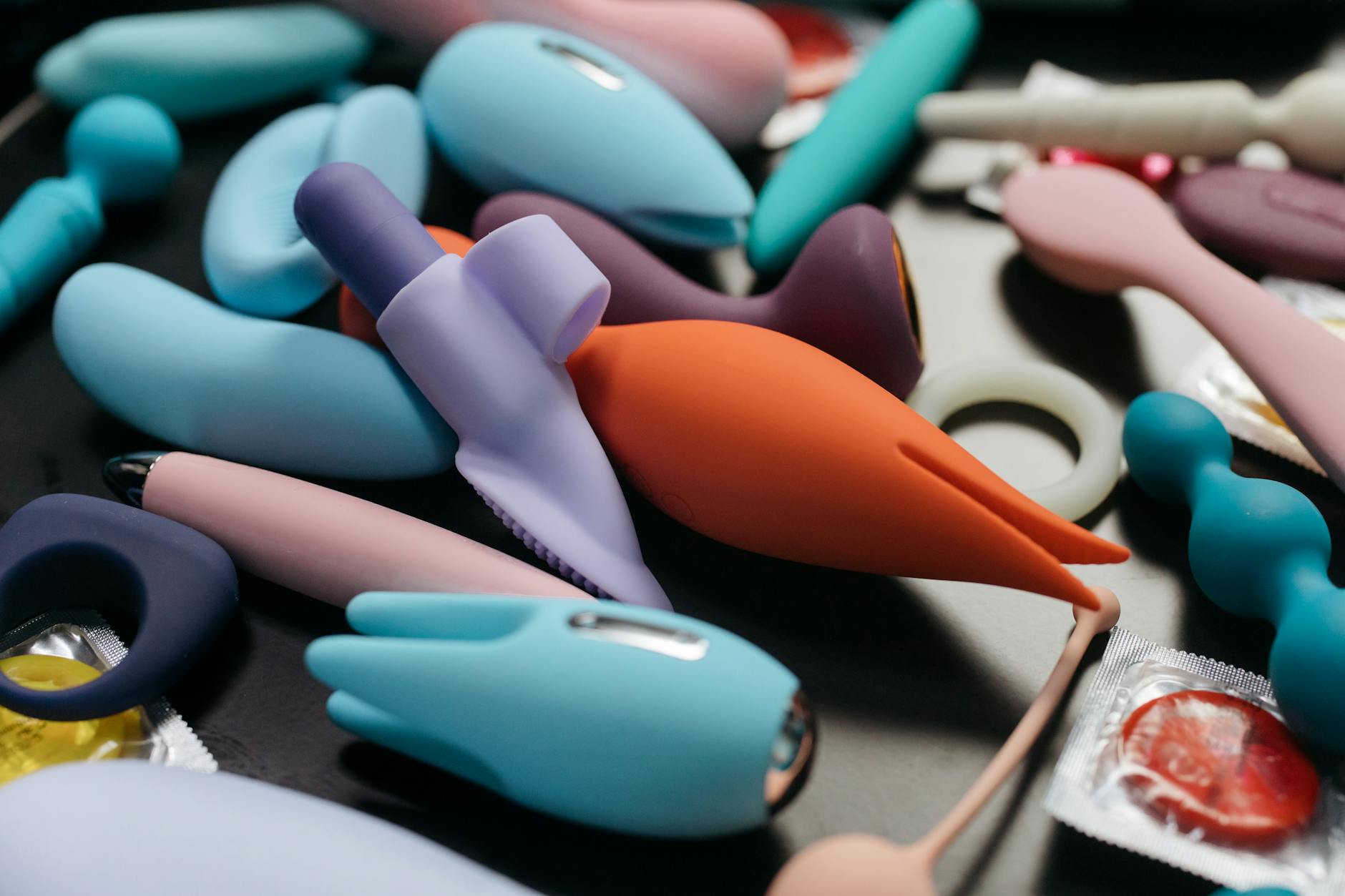
The lemon vibrator is built for exactly this kind of work. The suction pattern mimics the sensation of oral sex, which naturally builds in waves rather than a flat, constant buzz. It also gives you huge flexibility in intensity. You can start on pattern 1 or 2—barely perceptible, more like a gentle massage than direct stimulation—and spend 10 minutes there while everything else happens: touch, conversation, breathing together, foreplay that actually feels like foreplay instead of a two-minute warm-up.
Setting up the environment for slow
Foreplay that builds slowly demands fewer distractions. You can't be half-present and expect real arousal. This doesn't mean candles and rose petals if that's not your vibe, but it does mean creating conditions where your body can actually relax.
Three practical things that make a difference:
Kill the notification noise. Phone on silent, in another room if you can swing it. Your nervous system is listening for threats, and a text buzz is technically a threat. Thirty minutes of actual presence beats an hour of half-distracted touch.
Temperature matters. Cold bodies don't relax well. Warm sheets, warm hands, warm room. You're trying to move toward parasympathetic activation, and shivering works against that.
Give yourself permission to be boring. You don't need a performance narrative. You don't need to make noise or come in a particular way. You need your partner's hand on your back while the lemon vibrator works at pattern 2 while you just... exist there. That's foreplay. That's enough.
The rhythm that works: start low, stay there
With a lemon clitoral vibrator, you have usually 5-10 intensity levels. Here's how I coach people through slow-burn sessions:
Minute 0-5: Pattern 1 or 2. No goal, just presence. Your partner's hands on you somewhere non-genital. Talking is optional but often helpful. You're signaling safety.
Minute 5-15: Still low intensity, but now you know where the vibrator is. Your body might not have responded yet. That's normal. You're building anticipation, not excitement.
Minute 15-25: Patterns 2-3 if it feels right. Sometimes you'll sense a shift. Breathing changes, your hips move slightly, you stop thinking about what you look like. This is when you know you're arriving, not performing.
Minute 25+: Now intensity can rise if you want it. Pattern 3-5. But you're not chasing orgasm. You're following sensation. Many people find their best pleasure comes from staying in this extended middle zone rather than crashing toward a climax.
The whole point is: there's no timeline. If you're 40 minutes in and still at pattern 2, that's not failure. That's honoring how you're built.

Photo by cottonbro studio on Pexels
When your partner thinks foreplay is inefficient
This is the conversation nobody wants to have but everyone needs to. If your partner sees extended foreplay as foreplay-that-takes-too-long instead of foreplay-that-works-for-your-body, you have a mismatch in philosophy, not technique.
There's no shame in needing time. And there's no nobility in someone rushing the process to save 20 minutes. Both of those narratives are wrong. What matters is whether your partner sees your pace as part of you, not a problem with you.
I often suggest reframing this with a partner. Instead of saying, "I need more foreplay," try: "I build arousal differently than you do. I need 20-30 minutes of sustained, gentle attention before my body is ready. I know that takes longer. That's the deal." Then the conversation becomes: Does your partner have 30 minutes? Is that a real obstacle or a preference? If they're not willing to show up for it, that's information about compatibility, and it's worth sitting with.
If you're using a tool like the Lem vibrator, your partner can also step back and let the toy do the building work while they provide touch elsewhere. That's not replacing them. That's collaboration.
What slow arousal actually tells you
Sometimes slow arousal means you genuinely need more time. Sometimes it means you're not fully comfortable, emotionally or physically, in the moment. Both are real. Neither is wrong. But they require different responses.
If you're with a partner you trust, in a relationship that feels safe, and arousal is still a 30-minute climb, that's just your wiring. Embrace it. Plan for it. Use the right tools, like a lemon vibrator, that support gradual building instead of fighting it.
If you notice you're slow to arousal specifically with a certain partner, or in a relationship where you feel watched or judged, that's your body telling you something. Slow arousal in that context isn't a feature. It's a signal. That's worth exploring separately, maybe with a therapist, because your body's pace is often trying to protect you.
The long-term shift nobody talks about
Here's what I've seen happen with people who finally give themselves permission to build arousal slowly instead of rushing it: they actually enjoy sex more. Not more frequently. More. Like, the pleasure deepens because there's no urgency, no performance anxiety, no watching the clock.
Some people report that after years of quick arousal patterns, shifting to a 20-30 minute foreplay window wakes something up. Your nervous system gets time to actually relax. Your clitoral tissue has time to fully engorge. Your brain gets time to check in with desire instead of just going through motions.
A lemon sucker vibrator supports this shift because it's quiet, non-threatening in appearance, gives you total control over intensity, and creates sensation that's more about sustained pleasure than climactic pressure.
Frequently asked questions
How do I know if I'm taking too long or if my partner is rushing?
The only "too long" is time that doesn't feel good to you. If you're genuinely aroused and building, that's working. If you feel pressured or watched, that's rushing. The difference is in your nervous system state, not the clock.
Can you use a lemon clitoral vibrator throughout foreplay or just at the end?
You can use it whenever. Some people love the vibrator as part of extended foreplay for 20-30 minutes. Others prefer partner touch for most of foreplay and bring the vibrator in near the end. There's no wrong place in the sequence.
If I need 30 minutes of foreplay, does that mean something is wrong with me?
No. About 30-40 percent of people with vulvas need extended foreplay to fully arouse. You're literally not alone. The narrative that good sex is quick sex is wrong, and frankly, whoever started it was probably not considering pleasure.
What if my partner gets bored during long foreplay?
If your partner is bored while you're getting pleasure, they're not actually present. Real foreplay involves presence from both people, even if the activities are asymmetrical. If boredom is a pattern, that's worth addressing directly: "I need you here for this. What would make 30 minutes feel good for you too?"
Does using a toy during foreplay mean my partner isn't enough?
No. A tool is a tool. Using a lemon vibrator during foreplay is like using your hands or mouth or fingers, just with a different sensation. It doesn't replace your partner. It expands what's possible.
How do I tell my partner I want to slow down and extend foreplay?
Be direct and kind: "I'd like to try something different. I want to build slower, with more time. Can we try 20-30 minutes of foreplay next time, no timeline for what comes after?" If they say yes, they're showing up. If they say no, that matters too.
The bottom line
Slow-burn arousal isn't a limitation. It's your blueprint. When you honor it instead of fighting it, when you choose partners and tools that support it, foreplay stops being the thing you rush through and becomes the thing you actually savor. That's when everything changes.