How anxiety shuts down arousal before it starts
Here's the thing about anxiety and sex. It's not that anxiety makes you less interested in pleasure. It's that anxiety triggers your sympathetic nervous system, which is basically your body's panic button. When that button gets pressed, blood flow redirects away from your genitals and toward your limbs. Your clitoris goes pale. Lubrication dries up. Sensation numbs out. Your body has now prioritized survival over pleasure.
This is not a character flaw. This is neurobiology.
The tricky part is that anxiety around sex creates a feedback loop. You worry you won't be able to get aroused, so you get tense, so arousal doesn't happen, so next time the anxiety is even worse. By the time you're trying to have pleasure, you're already halfway to a panic attack and your body is literally not equipped to feel anything good.
Why traditional vibrators often backfire for anxious bodies
Most vibrators rely on sustained direct friction to build sensation. For an anxious nervous system, that's a problem. Direct vibration can feel like pressure or overstimulation when you're already wound tight. Your pelvic floor muscles clench harder to protect against the intensity. More tension means less blood flow, which means less arousal, which triggers more anxiety. You're now fighting against yourself.
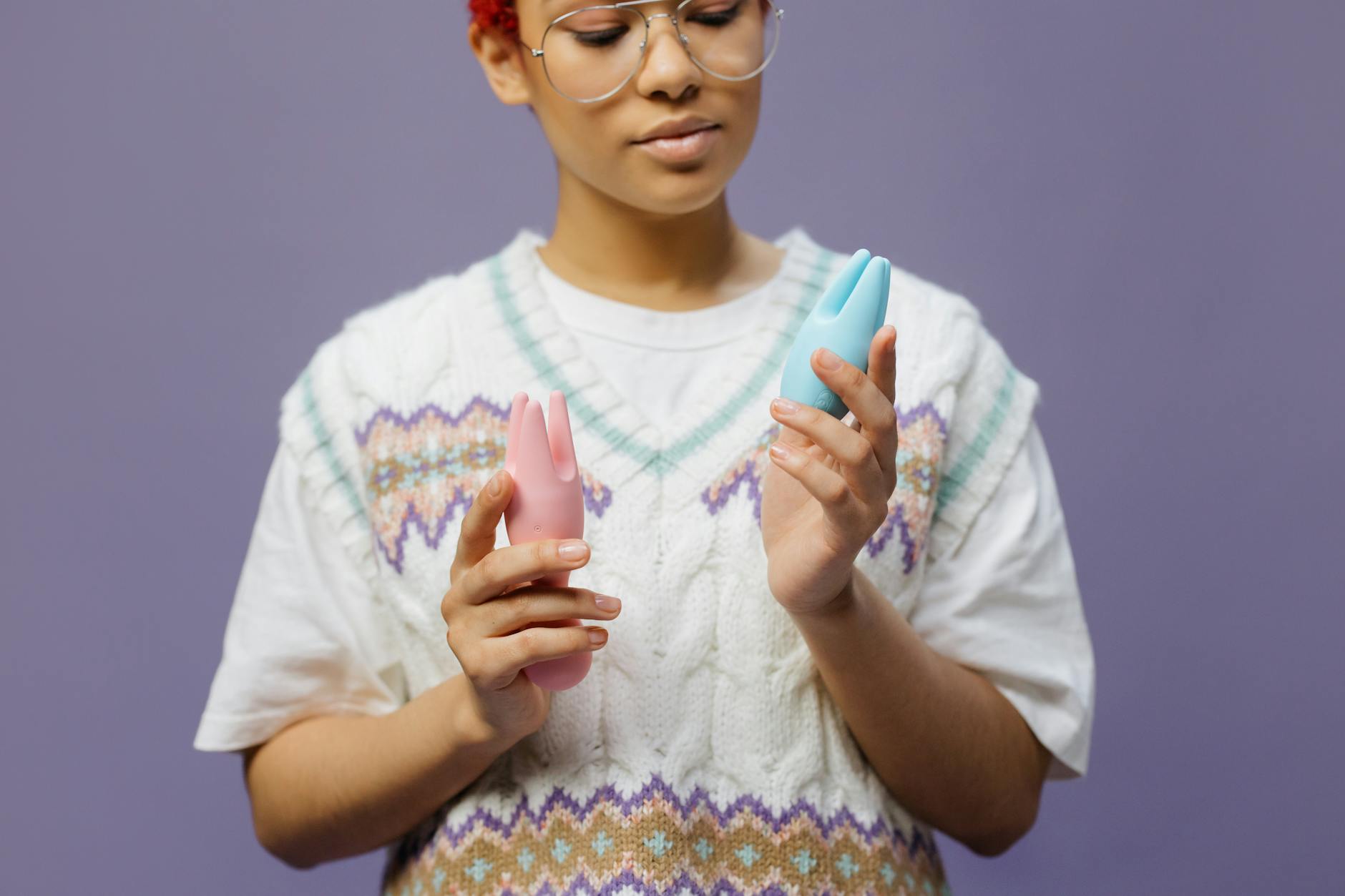
A lemon clitoral vibrator works differently. The air-suction technology doesn't pound or buzz in a traditional sense. Instead, it creates a gentle, rhythmic suction that stimulates the entire clitoral complex without the sharp mechanical pressure of a standard vibrator. For anxious bodies, this changes everything.
How air-suction resets your nervous system
When you use a lemon vibrator on a low setting, something unusual happens. The rhythmic suction creates a gentle anchor for your attention. Instead of anxiety thoughts spiraling, your nervous system gets a signal: something good is happening, and it's safe to pay attention.
This is called somatic anchoring. Your body has a sensation to track that's not about pressure or intensity, just about gentle, consistent stimulation. Your breathing naturally slows. Your pelvic floor muscles gradually release their grip. Blood flow starts returning to your genitals. Sensation wakes up.
The key is starting impossibly low. If you're coming to a lemon clitoral vibrator from a place of anxiety, patterns 1 and 2 are your friends. You're not trying to chase an orgasm. You're trying to signal your nervous system that pleasure is possible and safe.
The timing setup that actually works
Timing matters more when anxiety is in the mix. Here's what I recommend to most of my clients.
Start your session 20 to 30 minutes after you've done something calming. Not meditation necessarily, though that works. A walk, a shower, listening to music you love, tea, a conversation with someone who makes you feel safe. Anything that downshifts your nervous system before you even touch yourself.
Then, when you're ready, give yourself permission to spend 10 to 15 minutes just touching your body in non-sexual ways. Your neck, your arms, your belly. This is called sensate focus. You're reminding your body that touch is safe and can feel good without needing to lead anywhere. Your nervous system starts learning the difference between "threat touch" and "pleasure touch."
Only after that do you introduce the lemon vibrator. And even then, spend the first five minutes on your outer thighs, your mons, anywhere but the clitoris itself. Let the device and your body get acquainted. Let your nervous system clock the signal: this is safe.
Managing the thoughts that show up
Anxiety loves to narrate. "This isn't working." "You're too broken." "You've been trying too long." "Your partner is waiting." When those thoughts appear (and they will), here's what actually helps.
Don't fight them. Seriously. The moment you start arguing with your anxious brain, you've given it your full attention, which is exactly what it wants. Instead, notice the thought like it's a text message from someone boring. "Oh, there's that thought again." Then return your attention to the physical sensation.
This is genuinely hard, especially the first few times. You might need to do this 20 times in a 10-minute session. That's not failure. That's your nervous system slowly learning that thoughts are just thoughts and your body is trustworthy.
Some people find it helps to have one specific sensory anchor they return to. For some it's the sound of the lemon vibrator. For others it's the specific feeling of suction on their clitoris. Pick something simple and come back to it every time the narration starts.
When to explore patterns and intensity
Once you've established that low-intensity patterns feel okay to your body (and this might take three sessions, or ten, no timeline is "behind"), you can start experimenting with what comes next.
Most people find that after a few sessions of patterns 1 and 2, they want to try pattern 3 or maybe the pulse settings. Go slow. Increase one variable at a time. If you jump from pattern 1 to pattern 5, you're testing your nervous system more than your pleasure.
Pay attention to what your body actually wants, not what you think should feel good. Some people find that suction-only patterns without vibration are the ticket. Others need a little rhythmic pulsing mixed in. There's no "correct" way to use a lemon vibrator, only what works for your specific nervous system.
The partner conversation that matters
If you're working with a partner, the anxiety piece gets more complicated because now there's another person's expectations in the room. Here's my advice: tell them what's happening before you start exploring again.
Not a full clinical breakdown. Just something like: "My anxiety has been hijacking my arousal, so I'm going to rebuild this slowly with some specific tools. This isn't about you or our relationship. It's about me learning to trust my body again. I might need 10 minutes alone, or I might want you nearby not touching me, or I might want to do this a few times before anything happens with you. I'll tell you what I need as I figure it out."
Most partners actually relax when they know what's going on. The mystery of "why isn't this working" is way more stressful than the reality of "oh, we're doing a reset."
When to bring in professional support
Some people reset their nervous system with a lemon clitoral vibrator and move forward beautifully. Others hit a wall where anxiety is still running the show even after weeks of practice. If you're in that second group, that's not a reflection on you or the vibrator. It's just a signal that your nervous system needs more support than a tool alone can offer.
A therapist trained in somatic work or sex therapy can help you understand what anxiety is protecting you from. Usually there's something deeper. Past trauma, relationship stuff you haven't processed, body image fears, genuine medical conditions. A professional can help you address the root, not just the symptom.
The lemon vibrator is a useful tool for rebuilding pleasure when anxiety has taken over. But sometimes you need both the tool and the guide.
One more thing
Whatever timeline this takes, you're not behind. You're not broken. You're not failing. You're just someone whose nervous system learned to protect you through anxiety, and now you're gently teaching it that pleasure is possible again. That's not easy work. It's brave work. Your body is worth the time it takes.
People also ask
Can you use a lemon vibrator if you have generalized anxiety disorder?
Yes, but you might need to adjust your approach. Start at the very lowest intensity (pattern 1), keep sessions short (5 to 10 minutes), and pair the vibrator with other nervous system regulation tools. Breathing work, grounding exercises, or even just being in a familiar, safe space makes a huge difference. If your GAD is severe enough that even gentle stimulation feels overwhelming, working with a therapist alongside using the vibrator is wise. The two support each other.
How long before a lemon vibrator helps with anxiety-related arousal issues?
There's no fixed timeline, but most people notice something shifting within three to five sessions. That might not be full arousal yet. It might just be "oh, I felt something and my body didn't panic." That's the milestone. From there, rebuilding usually takes two to four weeks of consistent, low-pressure practice. Consistent means several times a week, not daily. Your nervous system needs breaks.
Do I need to use a lemon vibrator alone, or can my partner be in the room?
Both work. Some people find that rebuilding arousal alone, without any pressure or observation, feels safer. Others like having their partner present but not touching, which is reassuring. Some start alone and gradually invite their partner in once they feel more confident. Listen to what feels right for your body. If being observed makes your anxiety spike, you're allowed to ask for privacy. There's no rule here except your own comfort.
What if the lemon vibrator makes anxiety worse?
Stop, and don't feel bad about it. For some people, any kind of genital stimulation is too much when anxiety is active. That's actually useful information. It means your nervous system needs other regulation tools first. Go back to sensate focus without the vibrator. Work with breathing or grounding. Once those feel easier, the vibrator might make sense. Or it might not, and that's fine too. You have options.
Can you use a lemon sucker-style vibrator with anxiety medication?
Yes. Most anxiety medications don't interfere with arousal in the way that some antidepressants do. That said, certain medications can affect sensitivity or orgasm response. If you've noticed changes since starting a medication, mention it to your doctor. They can sometimes adjust dosing or timing. In the meantime, a lemon clitoral vibrator on low settings is usually a safe tool to explore while you're figuring out the medication piece.
Is it normal to feel nothing when using a lemon vibrator if you have anxiety?
Completely normal. When anxiety is running your nervous system, sensation often goes numb as a protection mechanism. The vibrator isn't failing. Your body is protecting itself. This usually starts to shift after a few sessions of low-pressure practice, but it takes time. If you feel nothing after five or six sessions, that might be a sign to involve a professional who can help you understand what your body is protecting against.
The bottom line
Anxiety and arousal don't have to be enemies forever. Your nervous system learned to panic, and it can learn to trust again. A lemon vibrator, used slowly and with patience, gives your body a concrete signal that pleasure is safe. The rest is just showing up, breathing, and letting sensation rebuild at whatever pace feels right. You've got this.