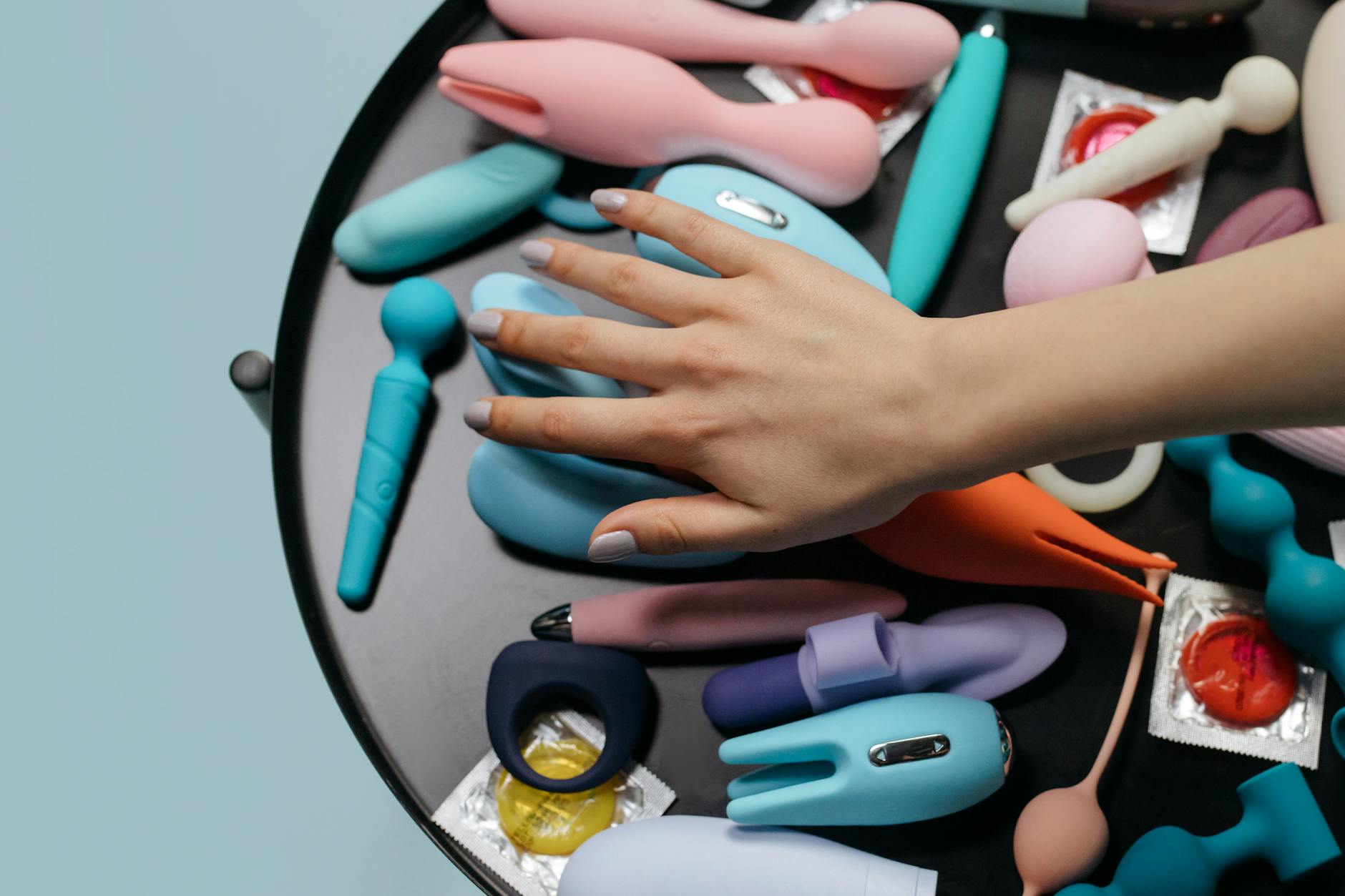
When desire disappears, it's not personal
Depression doesn't just cloud your mood. It hijacks your nervous system, flattens your dopamine and serotonin, and tells your body that pleasure is irrelevant. For many people, desire vanishes completely. And that's not weakness or a relationship problem. It's what depression does.
When the medication kicks in, therapy helps, or the fog simply lifts with time, something weird happens: your mind wakes up before your body does. You might feel ready for pleasure, but your nervous system still thinks it's in survival mode. Sensation feels muted. Touch that used to excite you now feels like nothing. Or worse, it feels uncomfortable.
That gap between wanting to want and actually feeling desire is where most people get stuck. They assume their body is broken. It isn't. It's just recalibrating. And the good news is that sensation is learnable again.
What depression actually does to arousal
Depression affects pleasure at multiple levels. First, the neurochemical layer: dopamine and serotonin dysregulation doesn't just affect your mood. These chemicals are also the backbone of sexual response. Without them, your brain can't prioritize pleasure signals. Your body receives touch, but the message doesn't land.
Second, there's the somatic layer. When you're depressed for weeks or months, your nervous system learns to stay in a low-arousal state. This protects you from feeling worse, so it's actually adaptive. But it means your body forgets how to transition from resting to aroused. The pathways are still there. They're just rusty.
Third, there's the psychological layer. Depression often brings shame about your own needs. You might feel guilty for wanting pleasure at all. Your brain learned that wanting things leads to disappointment, so desire itself becomes something to suppress.
When you're starting to recover, all three layers need gentle attention.
Why a lemon clitoral vibrator works particularly well here
A clitoral vibrator like the Lem is different from other adult toys because it uses suction and gentle pulsing rather than direct friction. This matters when you're reawakening sensation because suction feels less aggressive than vibration alone. It's stimulating without being demanding.
For someone whose nervous system has been in protective mode, this gentleness is the entire point. A lemon vibrator meets your body where it actually is instead of asking it to perform at full intensity immediately. You can start at the lowest setting, feel something pleasant without it being overwhelming, and let your nervous system gradually remember that pleasure is safe.
The shape also helps. The rounded, mouth-like opening of a lemon sucker sits perfectly against the clitoris and labia without requiring specific positioning or pressure. When sensation is muted, you don't want friction that demands you find the exact right angle. You want something intuitive.
Starting with the right mindset
Here's what doesn't work: treating this like a performance test. "Can I still have an orgasm?" is the exact wrong question when you're beginning again. The question is: "Can I feel something pleasant right now?"
Pleasure after depression isn't about reaching a destination. It's about noticing small sensations and trusting that your body remembers how to feel. That's actually harder than it sounds because your brain will try to pressure you into the familiar intensity you remember from before you were depressed.
Set a boundary with that pressure. You're not trying to recreate anything. You're discovering what sensation feels like right now, in this nervous system, at this moment in your recovery.
Give yourself 20 to 30 minutes and absolutely no goal beyond "explore what feels okay." Not good. Okay. That's the bar.
The first session with a lemon sucker
Start by getting familiar with the toy itself outside of any sexual context. Hold it, feel the texture, look at it without expectation. This sounds almost silly, but when your nervous system has been dysregulated, adding novelty carefully matters. You're teaching your brain that this object is safe.
Then lie down somewhere comfortable where you won't be interrupted. This isn't about romance or setting. It's about your nervous system feeling secure enough to experiment. Wear whatever makes you feel most at ease. Some people want full privacy. Others like soft clothes on. Follow your instinct.
Start with the Lem on the lowest setting. Bring it to the outer labia first, not directly to the clitoris. Let your body notice the sensation. You might feel a little tingle. You might feel almost nothing. Both are completely fine. Spend two to three minutes there, noticing what you notice without judgment.
Then move closer to the clitoral area, still on the lowest setting. This is where you might feel a shift. Suction vibrators tend to build sensation gradually. The stimulation intensifies as blood flow increases, which is actually ideal for someone relearning arousal. Your body is driving the intensity, not the toy.
If it feels good, stay there. If it feels uncomfortable or overwhelming, move away immediately. There's no shame in that. Your nervous system is telling you the truth.
What to do when sensation still feels numb
Some people come back to sexuality and find their clitoris is responsive. Others find it barely registers anything. If you're in the second camp, don't assume that's permanent. Depression can dull sensation for months after recovery begins.
Three things to try: First, focus on slow building. Instead of using the vibrator for 10 minutes at a time, try multiple short sessions over a few days. Five minutes every other day can sometimes be gentler than one longer session.
Second, try combining touch. Use a finger or your hand alongside the lemon vibrator. The combination of two sensations sometimes registers better than one alone when your nervous system is still recalibrating. You're not being weird. You're being strategic.
Third, be patient with numbness. If you've been on SSRIs (selective serotonin reuptake inhibitors) during depression, some antidepressants temporarily affect sensation. Talk to your doctor about whether your medication might be contributing. Sometimes a dosage adjustment or switching medications helps. Sometimes you need to wait it out. Either way, knowing what's actually happening helps you stop blaming yourself.
Rebuilding without pressure or timeline
One of the cruelest things about recovery is that people around you assume that when depression lifts, you're "back to normal." But normal isn't a switch. It's a gradual reorganization of your nervous system.
With pleasure specifically, this means you might feel good one day and completely disconnected the next. That's not a setback. That's how nervous system healing actually works. Some days are for exploration. Some days are for rest. Both matter.
If you have a partner, this is where communication becomes everything. Not performative communication where you reassure them you'll be fine. Actual communication about what you need: "Right now I'm learning what pleasure feels like again. Sometimes that's easy. Sometimes it's not. I need you to not try to rush this or fix it."
What you don't owe anyone: an orgasm, performance, or a timeline. What you owe yourself: patience and curiosity about how sensation is returning.
When to reach out for help
If numbness persists for more than a few months after your depression starts lifting, mention it to your doctor or therapist. Prolonged anhedonia (the inability to feel pleasure) can sometimes signal that medication adjustments are needed, or that there's a component of depression that hasn't fully resolved.
If sensation is returning but it brings up intense shame or anxiety, that's also worth exploring with a therapist. Depression often teaches us that our bodies are problems. Sometimes pleasure restarts but so does the self-criticism. A therapist trained in how to use a lemon vibrator when anxiety interferes with arousal can help you untangle that.
And if you're finding that you and your partner are struggling to reconnect sexually, reaching out to a couple's therapist or relationship coach can help you rebuild that part of intimacy specifically.
The journey isn't linear
Recovery from depression isn't a straight upward line. Pleasure comes back in waves. Some weeks you'll feel more responsive. Other weeks you'll feel disconnected again. That's not failure. That's what healing actually looks like.
A lemon clitoral vibrator can be a gentle tool through all of it. Not a performance demand. Not a promise. Just a way to check in with your body, notice what sensation feels like right now, and trust that pleasure is worth reclaiming at whatever pace feels right.
People also ask
Is it normal for sexual desire to take months to come back after depression?
Completely normal. Desire is often the last thing to return during depression recovery. Your mood and energy might improve weeks before pleasure starts showing up again. This doesn't mean your body is broken. It means your nervous system is still stabilizing. Some people experience full desire return within weeks. Others take several months. Both timelines are fine. What matters is giving yourself permission to return to sexuality at whatever pace feels genuinely good, not at the pace you think you "should" be ready.
Can I use a lemon vibrator if I'm still on antidepressants?
Yes, absolutely. In fact, many antidepressants can affect arousal and sensation, so exploring with a gentle tool like a lemon sucker can actually help you understand what's medication-related versus what's depression-related. If sensation feels extremely muted while you're using the vibrator, that's worth mentioning to your prescribing doctor. Sometimes a dosage adjustment or a different medication helps. In the meantime, a clitoral vibrator on a low setting is actually a smart way to stay connected to your body without demanding intensity.
What if I still can't feel anything after a few weeks of using the vibrator?
First, extend your timeline. A few weeks is often not enough time for sensation to fully return, especially if depression lasted a long time. Keep checking in gently, but don't make it a test. Second, make sure you're not bringing performance pressure into it. That shuts down sensation faster than almost anything else. Third, consider whether medication or your depression's severity might be playing a role and talk to your doctor. And finally, remember that sensation sometimes returns in unexpected ways. You might feel something during solo exploration that didn't show up during partnered sex, or vice versa. Follow what actually works for your body right now.
Is it okay to use a lemon vibrator if I'm worried I'll never enjoy sex again?
That worry makes total sense after depression. It feels so real. But it's usually depression's voice, not truth. The fact that you want to feel pleasure again, that you're willing to try, means something in you hasn't given up. That's actually the part that recovers first. Use a lemon clitoral vibrator without any expectation of outcome. Some sessions will feel good. Others won't. The point is to stay curious about what your body is capable of, not to prove anything to yourself or anyone else.
Can my partner help me explore with a lemon vibrator as I'm rebuilding desire?
Sometimes. The key is that this should be something you want, not something you're doing to reassure your partner that you're recovering fast enough. If you want them involved, start with just showing them the toy and explaining what you're exploring. Let them know what helps (presence without pressure, maybe gentle touch elsewhere while you use it) and what doesn't (goal-focused comments, checking in constantly on whether you're feeling something). Some people recover sensation faster with a partner present. Others need solo exploration first. Both are completely valid.
How do I know if what I'm feeling is real arousal or just the vibrator doing its job?
That's a great question because they feel different. Real arousal has a quality of building, of your body responding and wanting more. Vibration alone can feel like external stimulation without that internal shift. The way to know is to turn the vibrator off periodically and notice what happens. Does the feeling fade immediately? That's mostly the toy. Does your body continue to feel warm, engaged, interested? That's arousal starting to return. Often they're both happening at once, and that's perfect. You're relearning what your body is capable of. The toy is helping you access what's actually still there.
Moving forward
Your body didn't forget how to feel pleasure. Depression just told it to pause. When you're ready to explore again, tools like a lemon vibrator can help you start small, build gradually, and trust yourself through the unfamiliar parts. There's no rush. Your nervous system will get there.