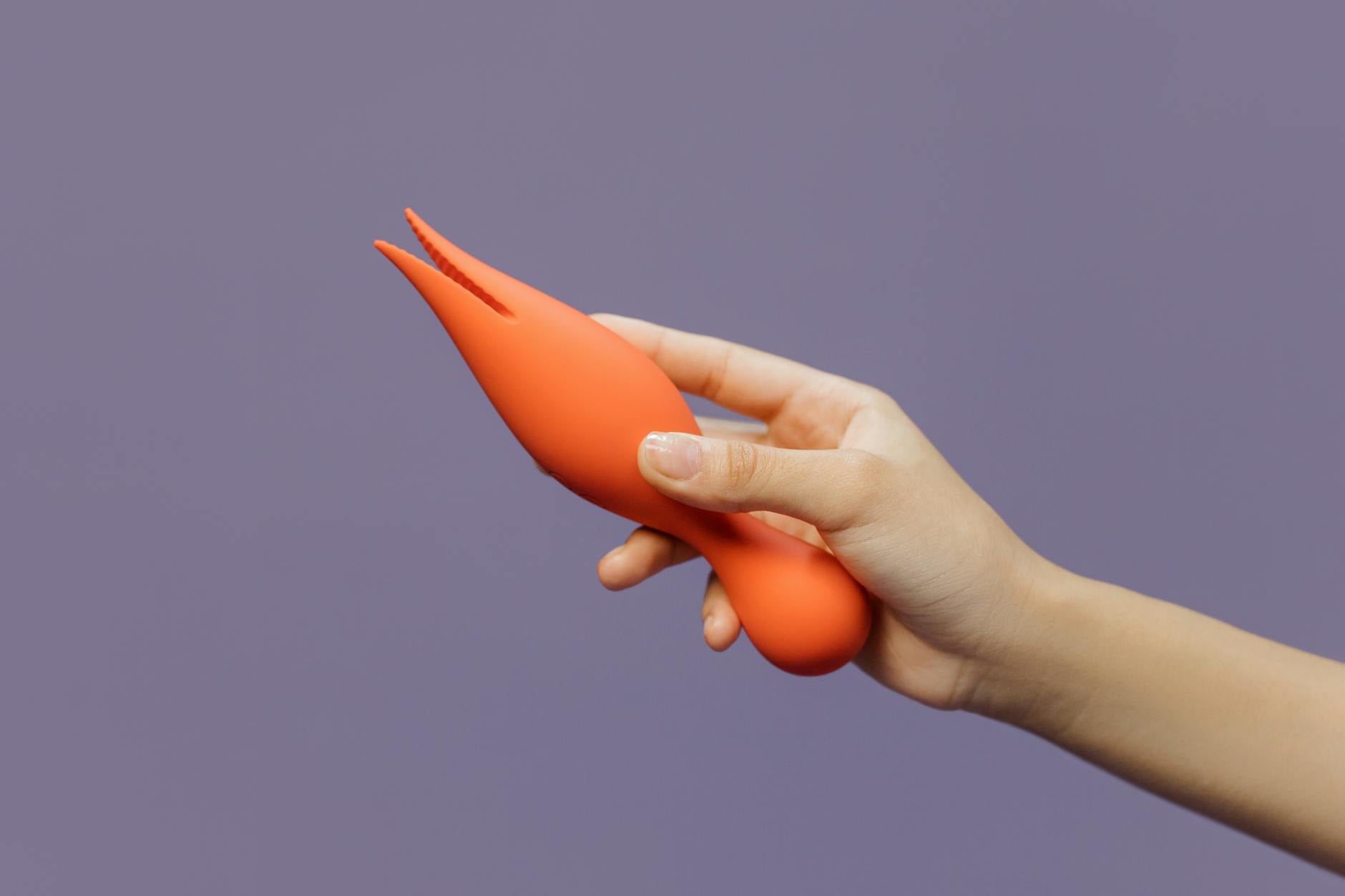
How to Use a Lemon Vibrator for Better Pleasure as You Age
Let's be real. Pleasure doesn't have an expiration date, but the way your body responds to it does shift. That shift isn't decline. It's a recalibration. And if you use the right tool, you can actually have better orgasms at 50 than you did at 30.
This is the part of aging nobody explains clearly. Websites will tell you that sensation decreases, which is true. They'll also imply that sex gets harder, which is only true if you're still using techniques that worked for a 25-year-old body. A lemon vibrator, and specifically how you use one, changes that equation entirely.
What actually changes as you age
Three physiological shifts happen as estrogen and testosterone gradually decline.
First, skin gets thinner. The tissue around your vulva, clitoris, and vaginal opening becomes more delicate. This means direct pressure that felt great at 35 might feel too intense or even uncomfortable at 55. The clitoral network of nerves doesn't disappear, but the surrounding tissue changes texture.
Second, blood flow to the genitals slows slightly. Arousal takes longer to build. You might need 20 minutes of foreplay instead of 10. This sounds like a problem until you realize it's actually an opportunity to slow down and pay more attention to what actually turns you on, not just what used to work.
Third, lubrication production decreases. This is purely mechanical and has nothing to do with how much you desire your partner or yourself. It's a tissue change, like skin drying out on your face.
But here's what doesn't change: the neural pathways for pleasure, the capacity for orgasm, the architecture of desire. Your brain still lights up the same way. Your ability to feel sensation doesn't vanish. It just needs a different approach.
Why lemon vibrators work better for aging bodies
A lemon vibrator (sometimes called a lemon sucker or lemon clitoral vibrator) works through air-suction stimulation rather than traditional vibration. That distinction matters enormously for bodies that have aged past 40.
Traditional vibrators create pleasure through repeated mechanical pressure. That works fine when tissue is thick and resilient. As tissue thins with age, that same pressure can feel harsh or cause irritation. A lemon vibrator creates pleasure through gentle rhythmic suction, which stimulates the nerve endings without requiring that constant direct pressure.
Think of it like the difference between a massage that's all deep pressure and one that uses lighter, rhythmic strokes. Both can feel amazing, but the second one feels better on skin that's become more sensitive.
The lemon clitoral vibrator also allows for longer sessions without fatigue. Traditional vibrators can cause temporary numbness if you use them for extended periods. Air-suction devices distribute stimulation across the tissue in a way that keeps sensation alive. You can use a lemon vibrator for 15, 20, even 30 minutes without losing feeling.
How to use a lemon vibrator as your body ages
Start with the lowest setting. I know this feels obvious, but most people skip this step because they're comparing it to their previous tolerance level. Forget that. Your clitoris has changed. Your tissue has changed. The pleasure pattern has changed. Starting at pattern 1 or 2 isn't a compromise. It's the actual correct entry point.
Use more lubrication than you think you need. Even if you're naturally lubricated, adding a water-based lube creates a smoother interface between the device and your tissue. This isn't about "needing" it. It's about optimizing sensation. A thin layer of silicone-free lube actually allows the suction sensation to feel stronger, not weaker.
Budget 15 to 25 minutes, not 5. Your body needs time to warm up. This isn't a sprint. When you're in your 40s, 50s, or 60s, arousal that builds slowly often builds stronger. The plateau phase becomes longer and deeper. Use that time.
Focus on indirect stimulation first. Instead of directing the lemon vibrator straight onto the clitoris, position it slightly off to the side or hover it a millimeter above the tissue. The suction will still reach the nerves but with less intensity. You can always move closer as arousal builds.
Pay attention to your pelvic floor. Aging sometimes means the pelvic floor gets tighter, not looser. This isn't shameful or abnormal. It's a common adaptation. Before you use a lemon vibrator, spend two minutes consciously relaxing your pelvic floor. Breathe into your belly, not your chest. Let your pelvic muscles soften. This changes how sensation travels through your body and often makes orgasm easier to reach.
The emotional part that makes the physical part work
Here's what I see in my practice all the time. People over 50 approach pleasure with either resignation ("I'm past my sexual peak") or performance anxiety ("Will I still be able to come?"). Both mindsets sabotage the experience.
Your sexual peak isn't behind you. Your sexual experience is deeper. At 20, pleasure is novelty and intensity. At 50, pleasure is attention and permission. If you're willing to experiment, you're likely to have better orgasms than you did at 30 because you finally know what you actually like instead of what you thought you were supposed to like.
When you use a lemon vibrator, you're not testing whether your body still works. You're exploring it. There's a huge difference in how that lands psychologically. Exploration has no failure state. Testing does.
One more thing. If you're with a partner, having a conversation about this before you use a lemon vibrator prevents the weird awkwardness that sometimes happens. "I'm trying a new device because I want to experience stronger sensation," is wildly different from your partner discovering a vibrator and wondering if they did something wrong. Context matters.
When aging brings actual friction
If you're experiencing pain during sex or with a vibrator, that's not a normal part of aging. Genitourinary syndrome is real, common, and very treatable. A gynecologist trained in menopause medicine can usually solve this in weeks with topical treatments.
If desire has dropped off a cliff, there are conversations worth having with a healthcare provider. Sometimes it's testosterone, sometimes it's medications, sometimes it's relationship dynamics. Don't assume it's just "what happens."
If you've noticed numbness or reduced sensation in other parts of your body, mention that to your doctor when you're discussing sexual changes. Sometimes those are connected.
But if you're just noticing that sensation is different and arousal takes longer, that's aging. It's not pathology. It's an invitation to figure out what this version of your body actually likes.
Why this matters
Pleasure in midlife and beyond isn't a consolation prize for past sexuality. For many people, it's the best part. You're less distracted by fertility concerns, less caught up in what you're supposed to like, less worried about performance. You're building decades of knowledge about your own body.
A lemon vibrator isn't a fix for aging. It's a tool that works with how your body has changed, not against it. And when you use it right, your body at 55 can feel better than it did at 35.
FAQs
Can I use a lemon vibrator if I've had hormonal changes from aging?
Yes, absolutely. In fact, that's when a lemon vibrator becomes most useful. Hormonal changes thin the tissue and change how you respond to stimulation. The air-suction approach of a lemon clitoral vibrator is gentler on delicate tissue than traditional vibrators. Start at the lowest setting and use extra lubrication. Your body will guide you from there.
Does arousal really take that much longer as you age?
Yes, but not because anything is wrong. Arousal takes longer because blood flow patterns change and neural pathways adjust. The tradeoff is that the arousal that does build tends to be deeper and longer-lasting. What used to take 5 minutes might take 15, but those 15 minutes often feel more intense than the original 5 ever did.
Will a lemon vibrator help if I've lost sensation in my clitoris?
Often, yes. The suction mechanism of a lemon vibrator stimulates the entire clitoral network, not just the surface. Many people report that sensation comes back or feels stronger when they switch to air-suction devices. That said, if numbness is complete or accompanied by other symptoms, get that checked by a healthcare provider.
Is it normal for a lemon vibrator to feel uncomfortable at first?
Yes. If the tissue has gotten more sensitive with age, the initial sensation can feel unfamiliar or even slightly uncomfortable. This usually passes within a few minutes as arousal builds. Keep the device on a lower setting, use more lubrication, and give yourself grace. Your body is learning how to respond to a new sensation.
Can I use a lemon vibrator if I'm on medications that affect sexual response?
Yes. Antidepressants, blood pressure medications, and other drugs can absolutely affect sensation and arousal. A lemon vibrator can help by providing stronger, more targeted stimulation. The gentler suction mechanism is especially useful if direct pressure makes you feel numb. For specific concerns about your medications and sexual function, check in with your prescribing doctor.
What if my partner feels threatened by me using a lemon vibrator?
This is worth a conversation. Sometimes a partner feels like a vibrator is a replacement, which it isn't. Sometimes they've internalized the myth that sexual pleasure should be effortless at any age, so a device feels like evidence that something is wrong. Usually, the fear softens when you reframe it: "This isn't about you. This is about me exploring what feels good in my body right now. I'm inviting you to be part of that." If they're still resistant, that's a relationship conversation, not a pleasure conversation, and might benefit from working with a couples counselor.
The long view
Your body at 50, 60, or 70 isn't the body you had at 25. But it's not lesser. It's more interesting. It knows what it likes. It has permission to ask for it. And when you give it the right tools, like a lemon vibrator designed to work with how you've changed, it can deliver pleasure that's sharper, longer, and more satisfying than anything you remember from before.
If you're curious about exploring new approaches to pleasure as you age, contact Hello Nancy. We're here to answer your questions without judgment.
Related Reading
If you're exploring how your body changes with aging, these posts dig deeper:
How Lemon Vibrators Improve Orgasm Quality for Women Over 50 walks through orgasm patterns specific to midlife and beyond.
How to Use a Lemon Vibrator for Better Orgasms When Hormones Shift explores the physiological shifts that happen before, during, and after menopause.
Why Lemon Vibrators Require Different Technique Than Traditional Vibrators breaks down the mechanics of why air-suction works differently than vibration.